The secret number
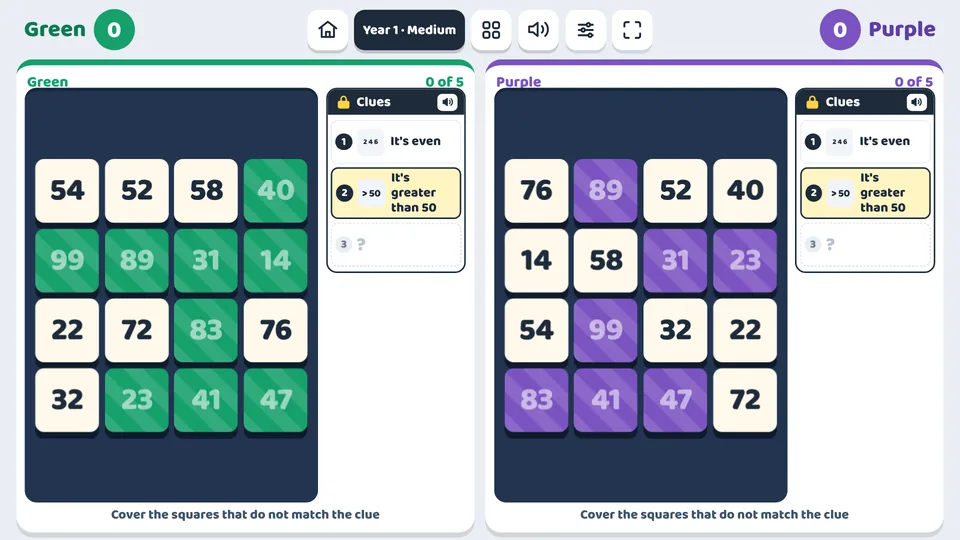
A logic and number game for the interactive whiteboard or tablet. The board has lots of squares and only one is the secret one. With the clue card, the clues come out one at a time (“It’s even”, “It’s greater than 40”, “It has 3 tens”) and each team covers the squares that do not match until one is left. Asking questions, as in Guess Who?, each team chooses its own yes-or-no questions and whoever gets there first wins. In early years it is played with shapes and colours.
What children practise
- Reasoning by elimination: covering what does not match a condition until only one square is left.
- Comparing numbers: greater than and less than.
- Odd and even numbers, ones, tens and hundreds.
- The sum of the digits, times tables, rounding and palindromic numbers.
- Multiples, factors, prime numbers and square numbers in Years 5 and 6.
- In early years, shapes, colours and sizes: it’s red, it’s a triangle, it’s small.
- Asking good questions: the ones that split the board in half get there faster.
Levels and settings
Early years
Shapes and colours with six squares and two or three clues; then more shapes, spots, stripes and sides, and numbers up to 10 with their dots.
Years 1 and 2
In Year 1, numbers to 20 and to 100; in Year 2, to 100 and to 1000: greater and smaller, odd and even, what it ends in, the tens, the sum of the digits and the 2, 5 and 10 times tables.
Years 3 and 4
In Year 3, numbers to 1000 and to 10,000; in Year 4, to 100,000 and to a million: the value of each digit (thousands, ten thousands...), greater and smaller, rounding, palindromes and repeated digits. The boards bring similar numbers, with the same digits in a different order.
Years 5 and 6
Up to a million and millions (seven digits), with multiples of 3, 4, 9 and 25, and multiples and primes up to 100: factors, prime numbers and, in Year 6, square numbers.
Two ways to play
With the card, the clues come out one at a time and are the same for both teams. Asking questions, each team chooses from several; some split the board better than others.
How to play it in class
- Choose the year group and difficulty: what comes up and how many squares there are is set for you. In More options you can change the way to play, the board and the points.
- Press Start. Each team has the same board on its half, with the squares in a different order. One child can also play solo.
- With the card, read or listen to the clue and cover the squares that do not match it. When there are none left to cover, the next clue comes out.
- Asking questions, choose a question: the game answers yes or no and you cover the squares that can no longer be it.
- If a team covers a square that does match, the game warns them and that half pauses for a moment. The first team to leave only the secret square wins the point.
Ways to play
In teams, at the same time
The screen splits into 2, 3 or 4 and each team plays on its own part at the same time.
For one player
One child plays on the whole screen at their own pace: on the whiteboard, a computer or a tablet.
Frequently asked questions
Is there always just one square that matches everything?
Yes. The game chooses the clues so that only the secret square is left at the end, and every clue covers at least one square. When asking questions, the board can always be solved too.
What if they cover one that does match?
The square shakes, a warning appears and that half pauses for a moment. No point is lost, but the other team may get ahead.
Can children who cannot read yet play?
Yes, in early years. The shape and colour clues have a picture and the voice reads them out.
Can it be played in English?
Yes. With the website in English, the clues and questions are in English. And The secret word can be played with English words.
Is it free?
You can play 5 free games without signing up. After that, a one-off payment of €9.99 unlocks all 100 games for ever, on all your devices. There is no subscription.
Do I need to install anything?
No. It opens in the browser of the interactive whiteboard, panel, computer, tablet or iPad. Once loaded, it also works offline.
More Maths games
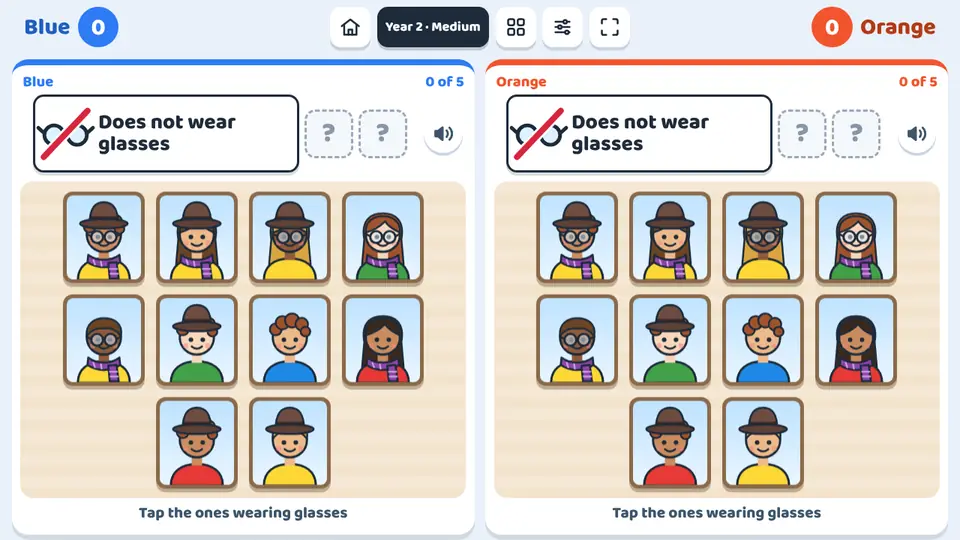 The detectiveThe detective is a logic game for the interactive whiteboard or a tablet.
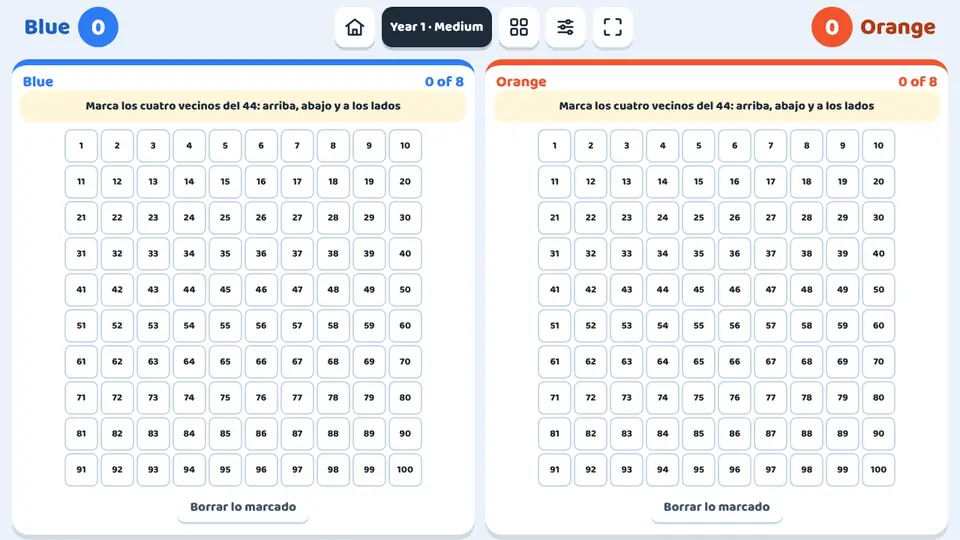 The hundred squareThe hundred square is the classic number grid, ready to use on the interactive whiteboard.
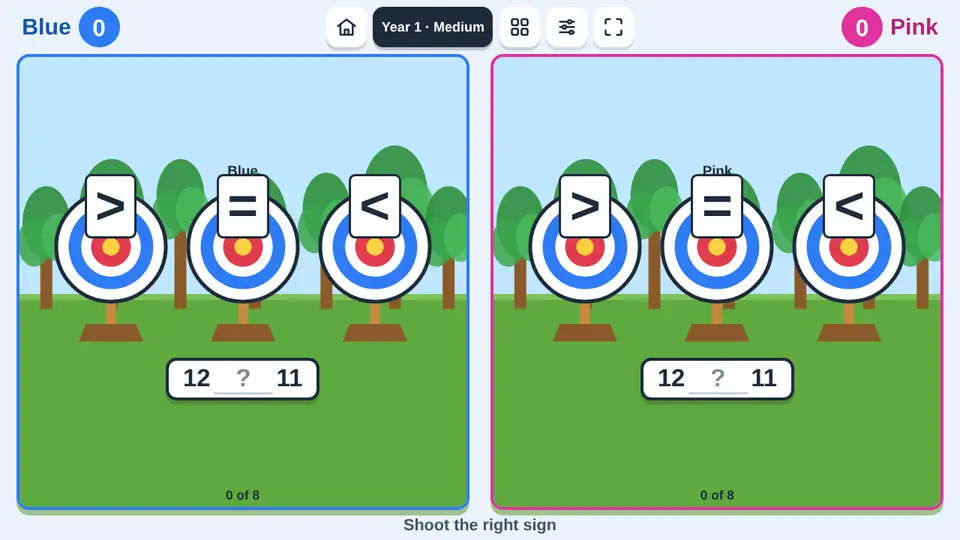 Greater, less or equalAn educational game for comparing numbers on the interactive whiteboard.
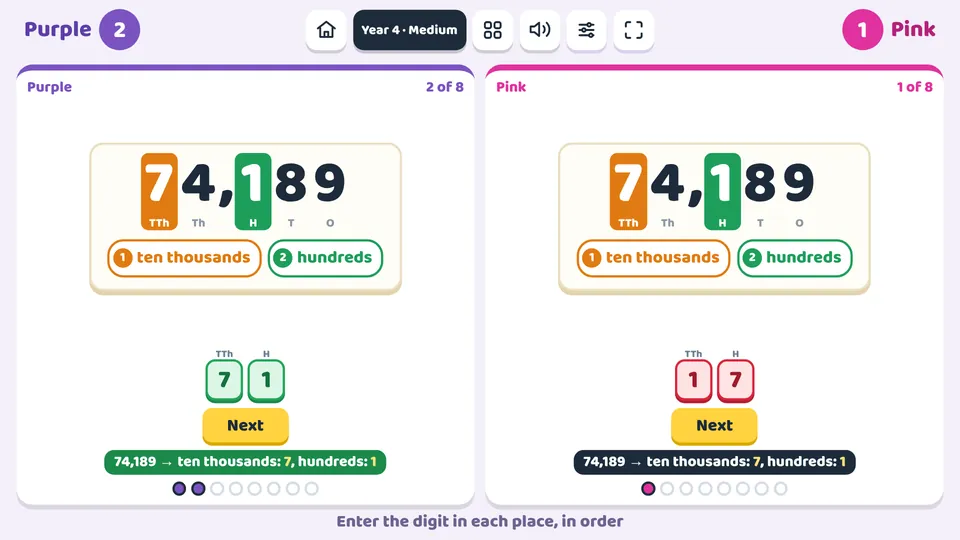 Digits in their placeA place value game for the interactive whiteboard.
The secret number
Play now